Discussion about the use of the UIS-360 Universal Inoculation Spinner
Author: Andrejs Gaivoronskis
M.Sc., Marketing Director, Biosan SIA
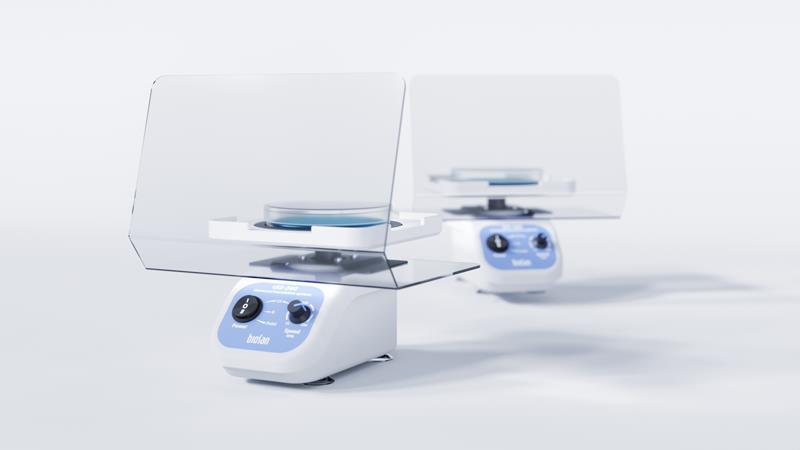
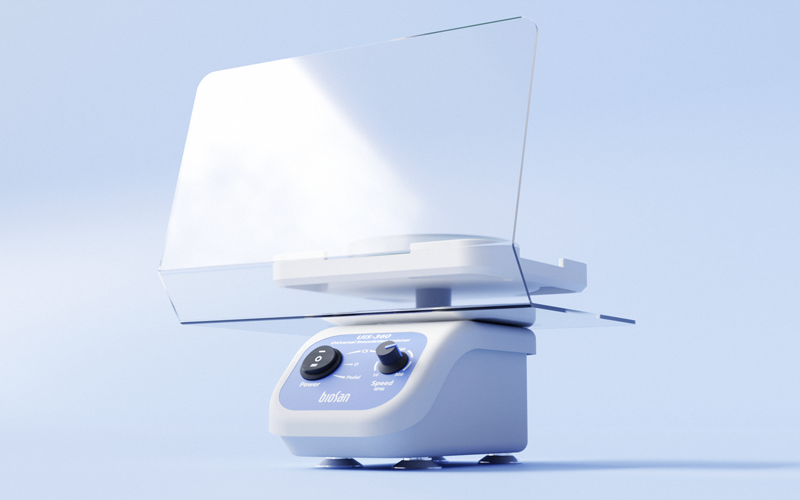
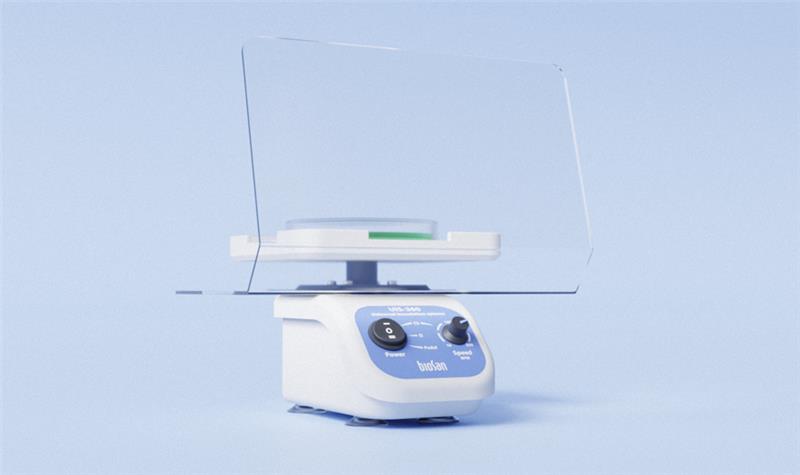
The UIS-360 Universal Inoculation Spinner provides a semi-automated approach to microbiological plating designed to improve consistency, operator ergonomics, and regulatory compliance in environments where full automation is not feasible or necessary. This article explores the technical and regulatory rationale for adopting the UIS-360, with reference to relevant pharmacopeia standards, good laboratory practices, and microbiological method validation principles. The discussion also situates the UIS-360 within broader industry trends toward practical semi-automation, illustrating how incremental innovation can have a meaningful impact in regulated laboratory settings.
Introduction
Manual Petri dish inoculation remains a widely used technique in microbiological laboratories, particularly in pharmaceutical, diagnostic, and academic settings. However, this traditional method is prone to variability due to operator technique, fatigue, and inconsistent rotation differences. These inconsistencies can compromise the accuracy and repeatability of colony enumeration, a critical factor in quality control and product release decisions. The UIS-360 Universal Inoculation Spinner addresses these challenges by introducing controlled, motorized dish rotation while preserving user control over inoculum delivery. It bridges the gap between manual labor and full automation, offering a measure toward better practice.
The Problem with Manual Inoculation Methods
Despite its ubiquity, manual Petri dish seeding is inherently limited by several critical disadvantages, particularly in laboratories aiming for precision, repeatability, and regulatory compliance. These limitations can compromise the accuracy and reliability of microbiological analyses, especially in high-stakes environments like pharmaceutical quality control, clinical diagnostics, and environmental monitoring.
1. High Variability and Operator Dependence
Manual rotation of Petri dishes introduces significant variability in plating results. Factors such as hand speed, angle of rotation, and pressure application differ from one technician to another and even from one sample to the next. This leads to inconsistencies in colony distribution, uneven growth patterns, and difficulty in counting or interpreting results. In regulated environments, such inconsistencies can challenge data integrity and repeatability.
2. Fatigue and Ergonomic Strain
Manual inoculation require repetitive, fine-motor wrist movements that can cause strain over extended periods. In high-throughput laboratories, this can lead to an increased risk of repetitive strain injuries (RSI), reduced concentration, and operator fatigue—all of which contribute to a higher rate of technical errors and variability in outcomes.
3. Lack of Process Standardization
Manual techniques are difficult to standardize across technicians, shifts, or facilities. Without consistent parameters—such as dish rotation speed, duration, or trajectory—laboratories struggle to validate their methods according to pharmacopeia or ISO standards. This makes method transfer between laboratories problematic and complicates audits or regulatory inspections.
4. Inefficiencies in Throughput and Productivity
Manual plating is time-consuming, especially when performed repeatedly throughout the day. Each plate must be handled and rotated manually, limiting throughput and tying up technician time that could be better spent on tasks requiring analytical judgment or oversight.
5. Increased Contamination Risk
More manual handling increases the potential for cross-contamination between samples or environmental exposure of the media. Manual methods often lack integrated disinfection protocols or protective features that are common in automated or semi-automated systems.
The limitations of manual inoculation underscore the need for semi-automated or fully automated solutions. Devices like the UIS-360 Universal Inoculation Spinner provide a scalable, practical response to these challenges—delivering consistent rotational motion without the cost or complexity of a fully automated plater.
The Technical Argument for the UIS-360
1. Improved Seeding Uniformity
Manual seeding often results in uneven colony distribution, especially when rotational speed is inconsistent. The UIS-360 standardizes this aspect of the process by delivering a precise 360-degree rotation every 5 seconds. This ensures more even streaking and colony dispersion across the agar surface, which is particularly useful in semi-quantitative testing and colony morphology analysis. Consistent motion directly correlates to better visual separation of colonies and a more uniform growth field, which can reduce interpretation errors.
2. Repeatability and Operator Standardization
Laboratory personnel vary in their technique. By introducing a mechanical standard to rotation, the UIS-360 helps reduce inter-operator variability, which is crucial in GMP and ISO 17025 environments. This also simplifies training and enhances reproducibility across shifts or lab sites. In validation settings, where method transferability and consistency must be demonstrated, the device supports quantifiable repeatability that can be documented in method suitability testing.
3. Ergonomic and Operational Benefits
Repetitive wrist movements associated with manual rotation can lead to strain injuries over time. The UIS-360 mitigates this risk by automating rotation, allowing the user to focus on the precise application of the inoculum without physical burden. This contributes to improved occupational health outcomes and supports compliance with workplace safety standards. In laboratories processing moderate-to-high volumes of samples, these ergonomic improvements can significantly reduce fatigue-related errors and increase technician satisfaction.
4. Cost-Effective Improvement
In contrast to fully automated spiral platers, the UIS-360 significantly improves plating consistency with minimal capital investment, no need for proprietary consumables, and near-zero maintenance requirements. It serves as an ideal solution for laboratories with moderate throughput that seek to standardize practices without high overhead. Importantly, the UIS-360 does not require complex installation, validation, or service contracts, allowing labs to upgrade workflows with minimal disruption.
5. Compatibility with Pharmacopoeia and Regulatory Guidelines
The UIS-360 is fully compatible with current pharmacopeia requirements, provided it is used within a validated method:
USP <61> and <62> permit alternative methods for microbial enumeration and testing of specified microorganisms, provided that equivalence to the reference method is demonstrated through validation.
"The use of alternative methods to those described in this chapter is permitted, provided that the methods used are validated and give results equivalent to those obtained by the pharmacopeial method.” — USP <61>
Ph. Eur. 2.6.12 and 2.6.13 echo the same principles, supporting the use of tools like the UIS-360 as part of validated workflows.
"Alternative methods, including automated methods, may be used, provided that their equivalence to the pharmacopeia method has been demonstrated.” — Ph. Eur. 2.6.12
EU GMP Annex 1 (2022) emphasizes the importance of standardized, validated methods in microbiological quality control and environmental monitoring, for which the UIS-360 can support consistent sample preparation.
As a semi-automated tool, the UIS-360 poses no challenge to validation and fits cleanly within the quality frameworks of regulated laboratories.
Conclusion
The UIS-360 Universal Inoculation Spinner offers a low-barrier yet impactful enhancement to traditional Petri dish seeding. By reducing variability, improving ergonomic comfort, and aligning with pharmacopeia validation frameworks, it presents a compelling case for adoption in laboratories where consistency, quality, and compliance matter—but where full automation is neither practical nor necessary.
In the broader context of microbiology laboratory operations, the UIS-360 reflects a practical shift toward affordable standardization—a step that doesn’t demand extensive budget justification or infrastructure overhaul. As microbiology labs continue to face increasing pressure for reproducibility, efficiency, and audit readiness, semi-automated tools like the UIS-360 deliver meaningful process improvements with minimal disruption and excellent return on investment.
It’s not a revolutionary device, but it doesn’t need to be. It’s a practical one—and in microbiology, sometimes consistency and simplicity are the most powerful upgrades of all.
References:
Froment P, Marchandin HVande Perre P, Lamy B2014.Automated versus Manual Sample Inoculations in Routine Clinical Microbiology: a Performance Evaluation of the Fully Automated InoqulA Instrument. J Clin Microbiol52:.https://doi.org/10.1128/jcm.02341-13
Nicole Peisach, Natalia Krotkov, Rachel Shaye, Ana María Cárdenas, Richard L. Powers Automation of plate inoculation and reading reduces process time in the clinical microbiology laboratory, compared to a manual workflowmedRxiv 2022.03.16.22272483; doi: https://doi.org/10.1101/2022.03.16.22272483
Croxatto, A. et al.Laboratory automation in clinical bacteriology: what system to choose?Clinical Microbiology and Infection, Volume 22, Issue 3, 217 - 235
Mischnik A, Trampe M, Zimmermann S. Evaluation of the impact of automated specimen inoculation, using Previ Isola, on the quality of and technical time for stool cultures. Ann Lab Med. 2015 Jan;35(1):82-8. doi: 10.3343/alm.2015.35.1.82. Epub 2014 Dec 8. Erratum in: Ann Lab Med. 2015 Mar;35(2):281. doi: 10.3343/alm.2015.35.2.281. PMID: 25553285; PMCID: PMC4272970.