Maintaining a PCR cabinet is crucial for ensuring cleanliness, preventing contamination, and prolonging the life of your equipment. Neglecting this simple routine can compromise experimental results, reduce efficiency, and lead to costly repairs.
This guide will cover the importance of PCR cabinet maintenance and the three key areas of upkeep: cleaning, preventive maintenance, and long-term maintenance.

1. Why Is PCR Cabinet Maintenance Important?
PCR cabinets are designed to protect sensitive biological samples from contamination by providing a controlled, sterile environment. Proper care ensures:
- Accurate experimental results by preventing cross-contamination.
- Recirculated airflow efficiency to maintain a clean working space.
- Extended lifespan of the equipment, reducing downtime and repair costs.
- Compliance with laboratory safety regulations and best practices.
2. Cleaning and Decontamination of PCR Cabinets
Cleaning frequency varies based on usage but should be performed as frequently as needed to maintain sterility.
2.1 Recommended Cleaning Solutions
Each PCR cabinet model may require different cleaning agents. Always refer to the user manual to ensure compatibility. Here are some guidelines:
Models UVC/T-M-AR, UVT-B-AR, and UVT-S-AR:
- These models have a special UV protective coating on the external side of the glass panels.
- Avoid aggressive cleaning solutions from outside that may damage this coating.
Model UVC/T-AR:
- Uses acrylic glass for transparent surfaces.
- Avoid organic solvent-based cleaners, pure alcohol, and alcohol-based solutions (>20%).
- Always wipe surfaces with distilled water after decontamination to remove residue.

QR code allowing instant access to User manuals
2.2 Cleaning Best Practices
- Always clean before and after experiments to prevent contamination.
- Use a lint-free cloth and recommended cleaning solution.
- Do not use any abrasive materials for any surface cleaning.
- Wipe down surfaces gently to avoid scratching acrylic or damaging coatings.
- Dispose any waste according to the local regulations to prevent biohazard risks.
3. Regular Maintenance: Checking Dust Filters
Dust filters play a crucial role in maintaining UV bulb efficiency in your PCR cabinet. If clogged, they can lead to:
- Reduced air circulation, affecting PCR cabinet performance.
- Potential reduction of UV irradiation efficiency, leading to costly repairs.
- Inconsistent experimental conditions and higher risk of cross-contamination due to impaired functionality.
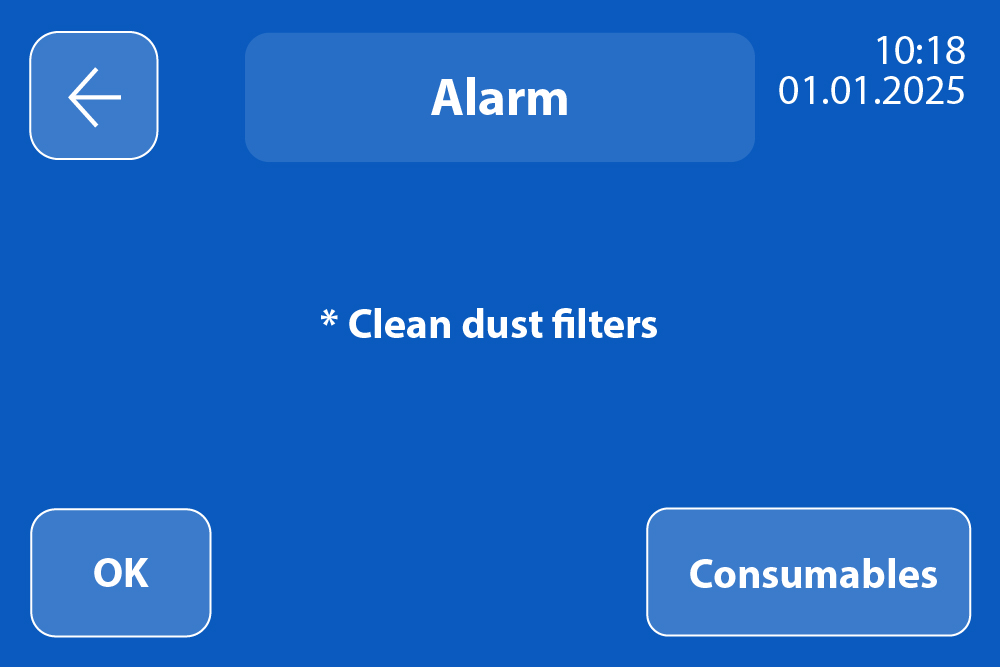
Notification to clean dust filters
3.1 How Often Should You Check the Filters?
A weekly visual inspection is recommended. We recommend performing following operations once per month:
- Cleaning – gently wash with warm tap water and air-dry.
- Replaced – if the filter is physically damaged. This will prevent dust accumulation on UV bulbs and ensure equipment proper functionality.
Failure to check and maintain dust filters can cause operation disruption, increase contamination risks and loss of manufacturer warranty due to misuse.
4. Long-Term Maintenance for PCR Cabinets
Long-term maintenance focuses on ensuring component longevity and preventing failures. The most critical components to monitor are UV lamps and visible light lamps.
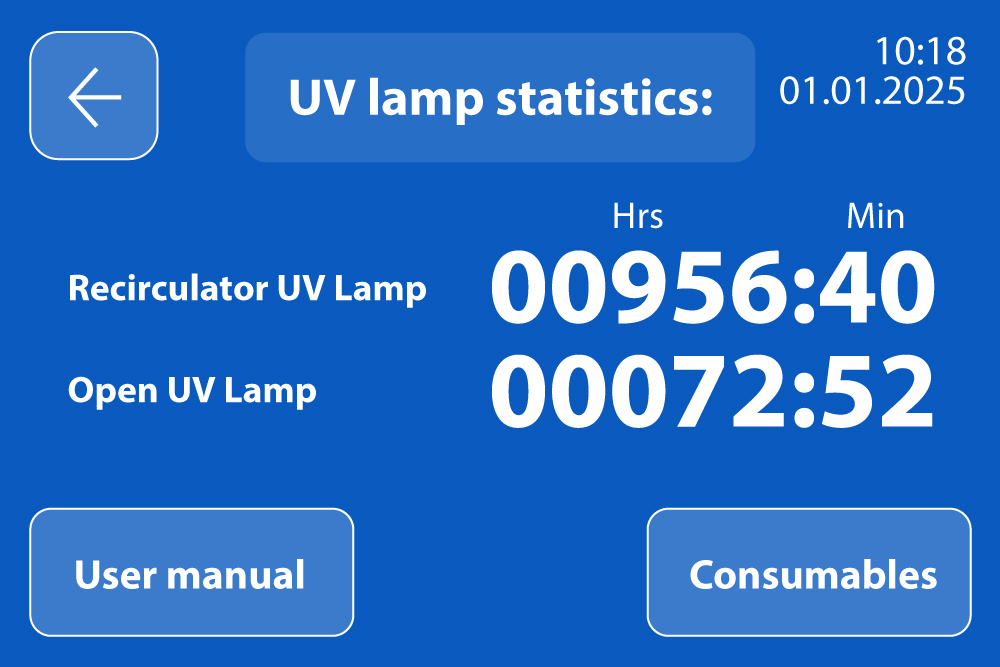
UV lamp statistics
4.1 UV Lamp Lifespan and Replacement
The functional lifespan of a UV lamp is 9,000 hours.
- To maintain consistent sterilization, it is best to:
- Calculate approximate replacement periods based on daily usage.
- Implement a bi-annual replacement schedule to avoid efficiency loss.

QR code allowing instant access to Consumable product codes
4.2 Advanced Monitoring Features
New PCR cabinet models include automated UV lamp monitoring with alarms to notify users when the lamp reaches the end of its lifecycle. This feature helps:
- Schedule timely preventative maintenance.
- Reduce the risk of using an ineffective UV lamp.
- Improve overall lab efficiency and safety.
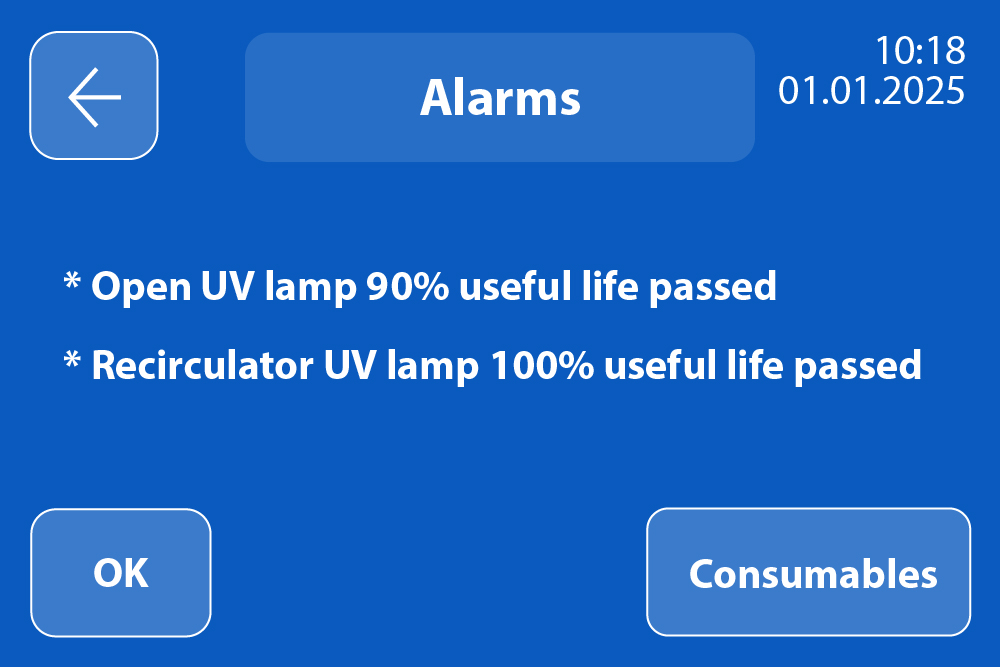
UV lamp life tracking system
5. Best Practices for PCR Cabinet Maintenance
To keep your PCR cabinet in peak condition, follow these best practices:
| Maintenance task |
Frequency |
Action Required |
| Cleaning and decontamination |
After each use and/or daily |
Use approved cleaning solutions, avoid harsh chemicals. |
| Dust filter inspection |
Monthly |
Visually check for dust accumulation, clean or replace if necessary. |
6. Conclusion
Caring for your PCR cabinet is essential for maintaining clean working environment and prolonging the life of the equipment. By following proper cleaning procedures, performing regular maintenance, and scheduling long-term upkeep, you can ensure consistent results and prevent costly repairs.
7. FAQs About PCR Cabinet Maintenance
Q1: How often should I clean my PCR cabinet?
A: Cleaning should be done before and after each use or as frequently as needed based on usage.
Q2: What cleaning solutions should I use for my PCR cabinet?
A: Always refer to the manufacturer’s guidelines. For models with UV protective coatings, avoid aggressive chemicals. For acrylic surfaces, do not use organic solvents or high-alcohol content cleaners.
Q3: How do I know when to replace my dust filters?
A: Perform a monthly visual check. If filters appear dirty and cannot be cleaned effectively, replace them immediately.
Q4: When should I replace the UV lamp in my PCR cabinet?
A: UV lamps last around 9,000 hours, but their efficiency drops after 8,000 hours. It’s best to replace them bi-annually or when your cabinet’s alarm system notifies you.
Q5: Can I use alcohol-based disinfectants for cleaning?
A: It depends on your PCR cabinet model. Avoid alcohol-based cleaners with more than 20% alcohol on acrylic surfaces to prevent degradation.
Q6: What happens if I neglect PCR cabinet maintenance?
A: Poor maintenance can lead to contamination, reduced performance efficiency, equipment damage, unreliable experimental results, and loss of manufacturer warranty.
By embracing these maintenance strategies, you'll ensure that your PCR cabinet operates at its best, remaining efficient, contamination-free, and ready for optimal performance.
Enjoy the peace of mind that comes with a well-maintained cabinet!